Plan the Mendix work. Let Claude build it.
MxCraft is for building a Mendix app with Claude and keeping that work organised. Weekly sprints, stories with acceptance criteria and a brief for Claude, tests that land on your desk, tokens counted per story and per sprint — and the model imported from MxScout, so every story knows which module it touches. It runs on your machine, has no dependencies, and keeps everything in files you can read.
An agent builds fast.
A chat is not a plan.
Building a Mendix app with Claude works — until you need to know what was agreed, what is done, what still needs a test and what it all cost. MxCraft keeps that in a board instead of a scrollback: stories, sprints, tests and tokens, next to the model they change.
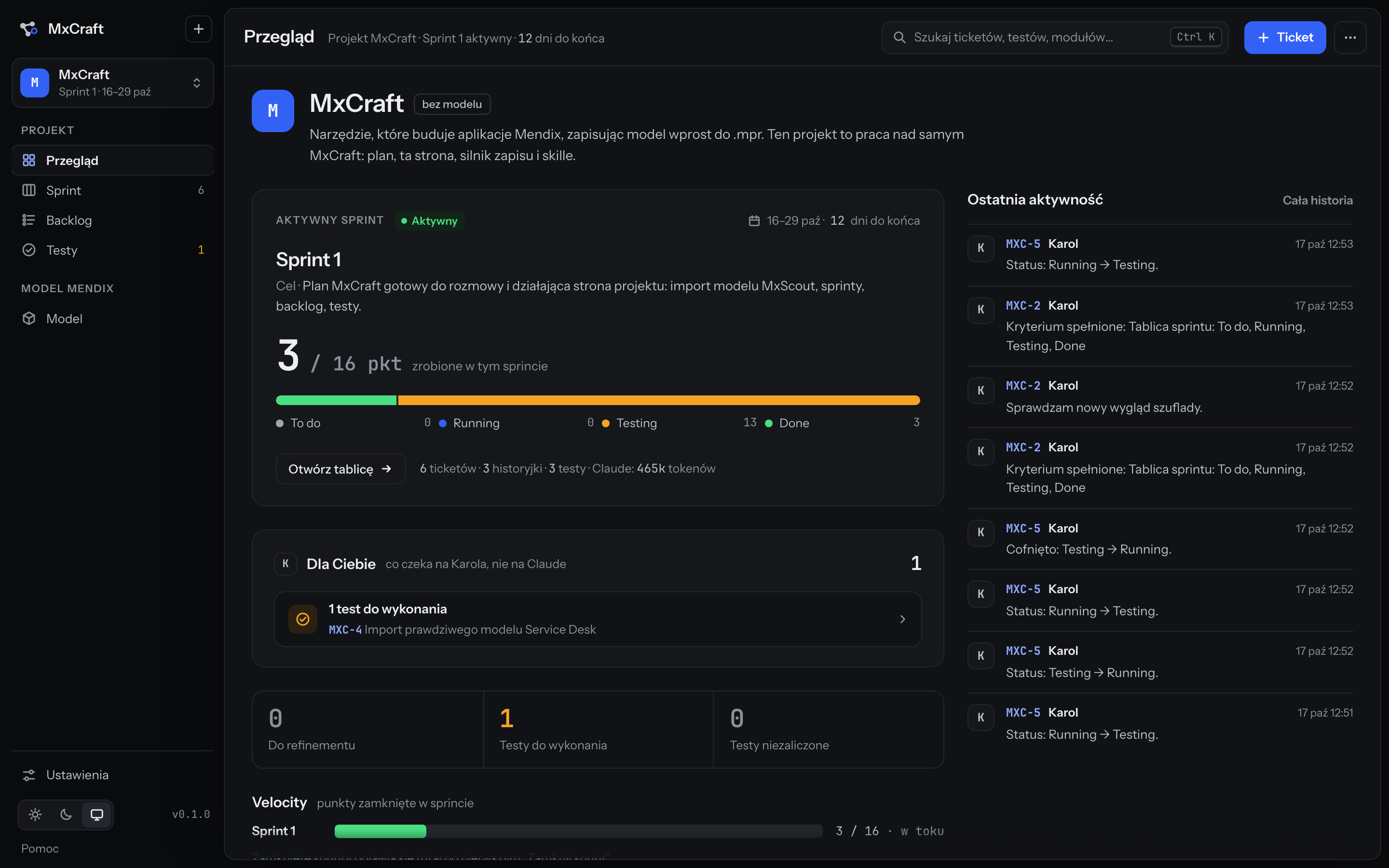
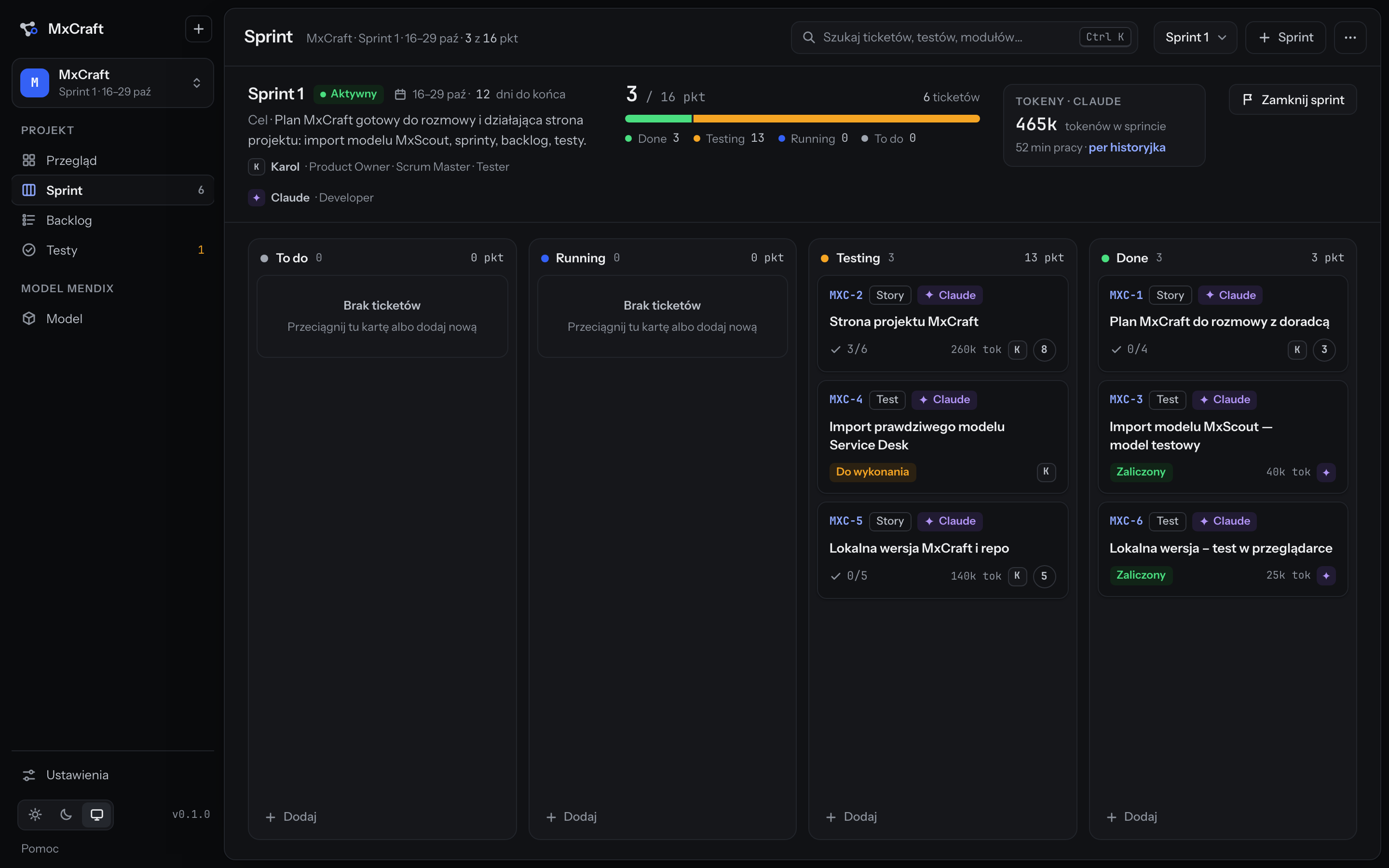
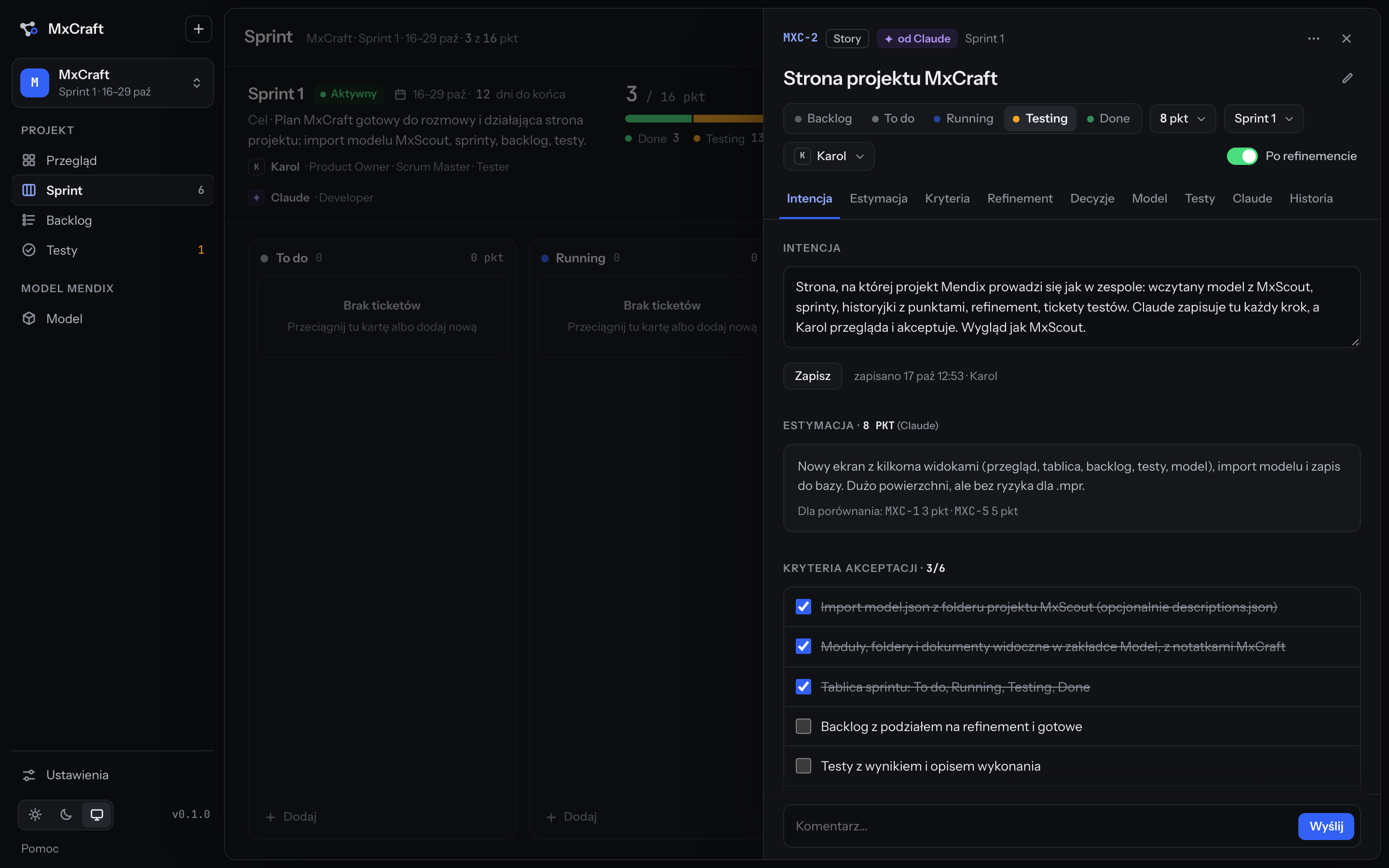
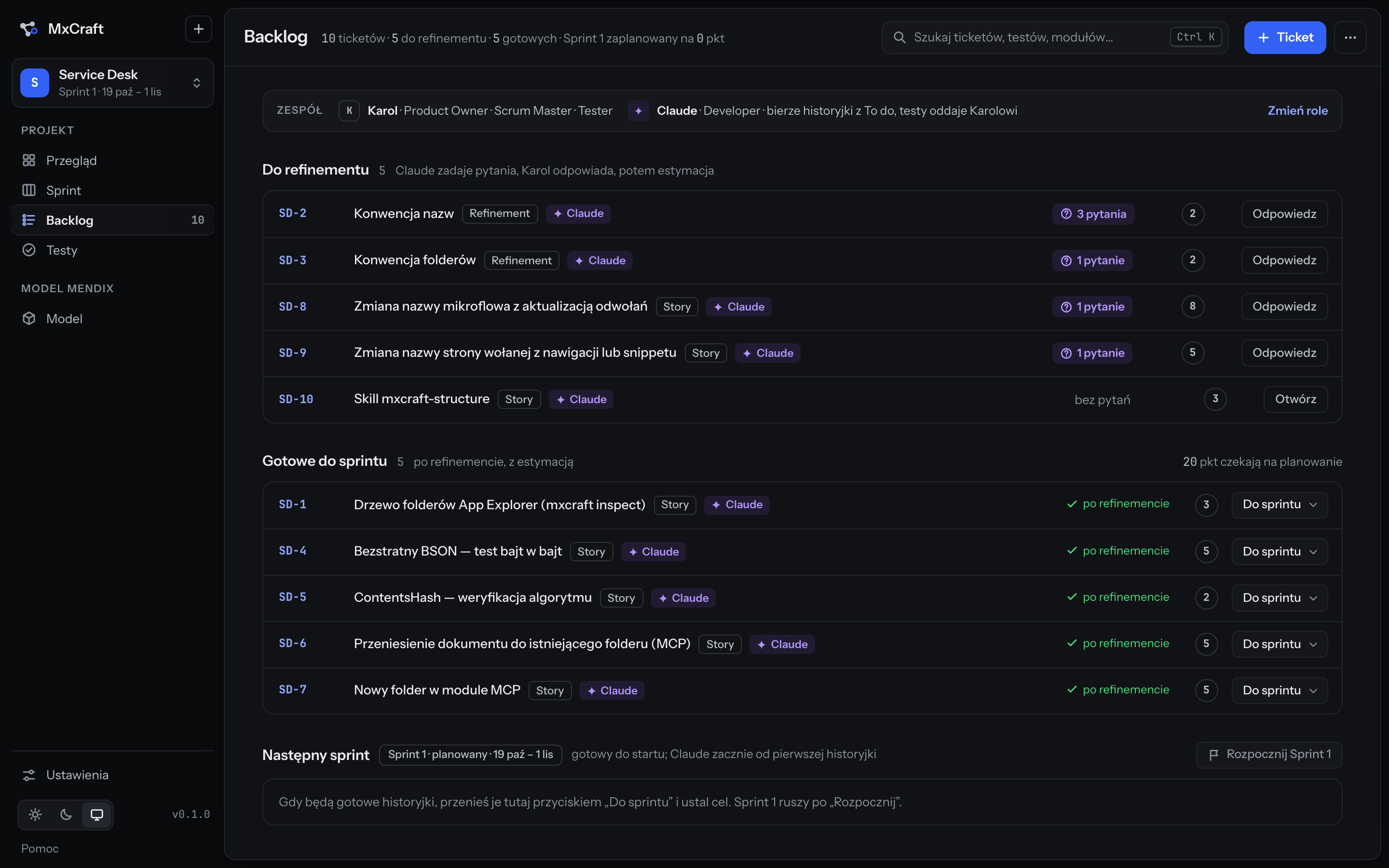
Five tabs and a drawer.
Six screens of a real project. The numbers come from the files; the text in the drawer is what Claude wrote while it worked, and says so.
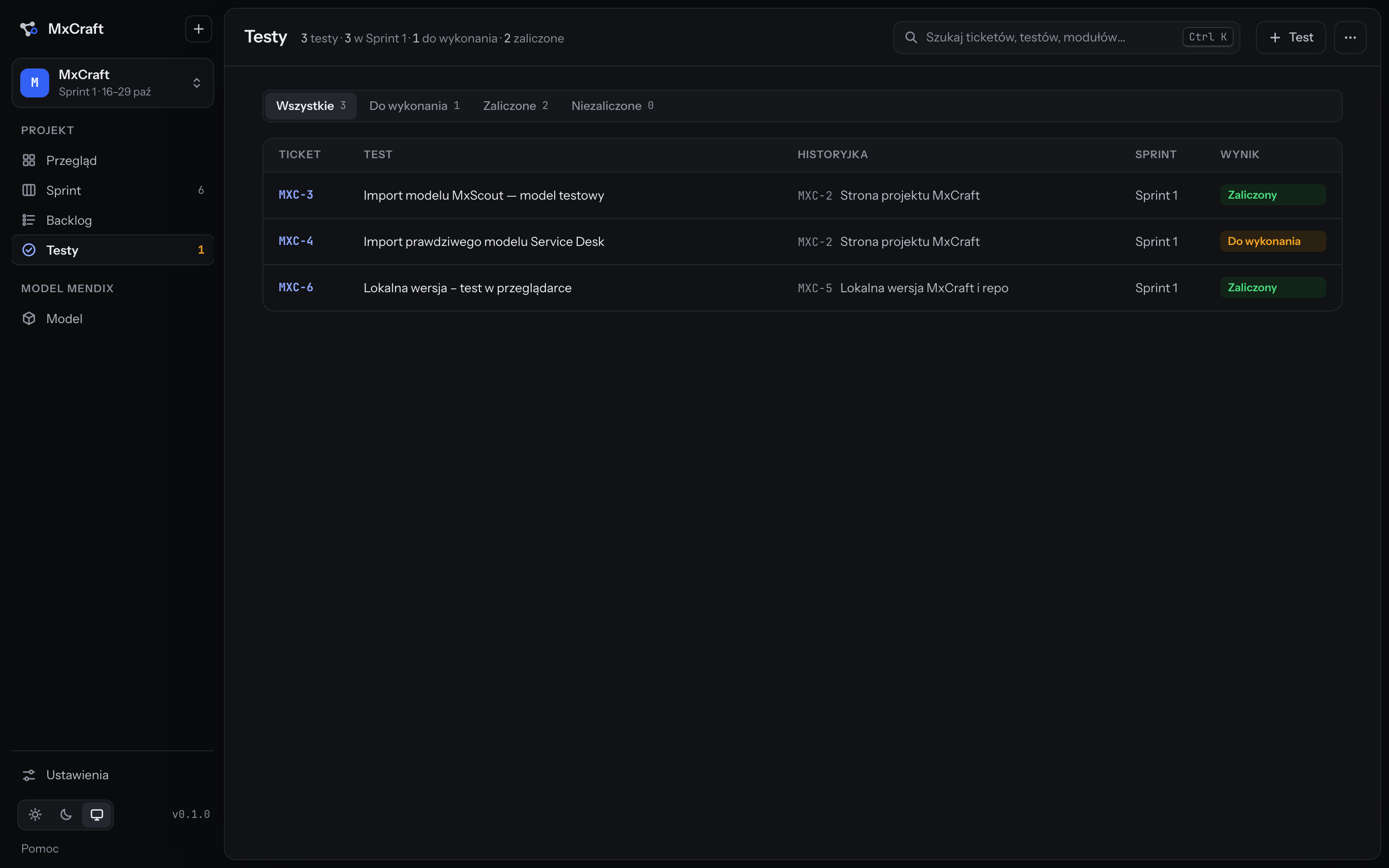
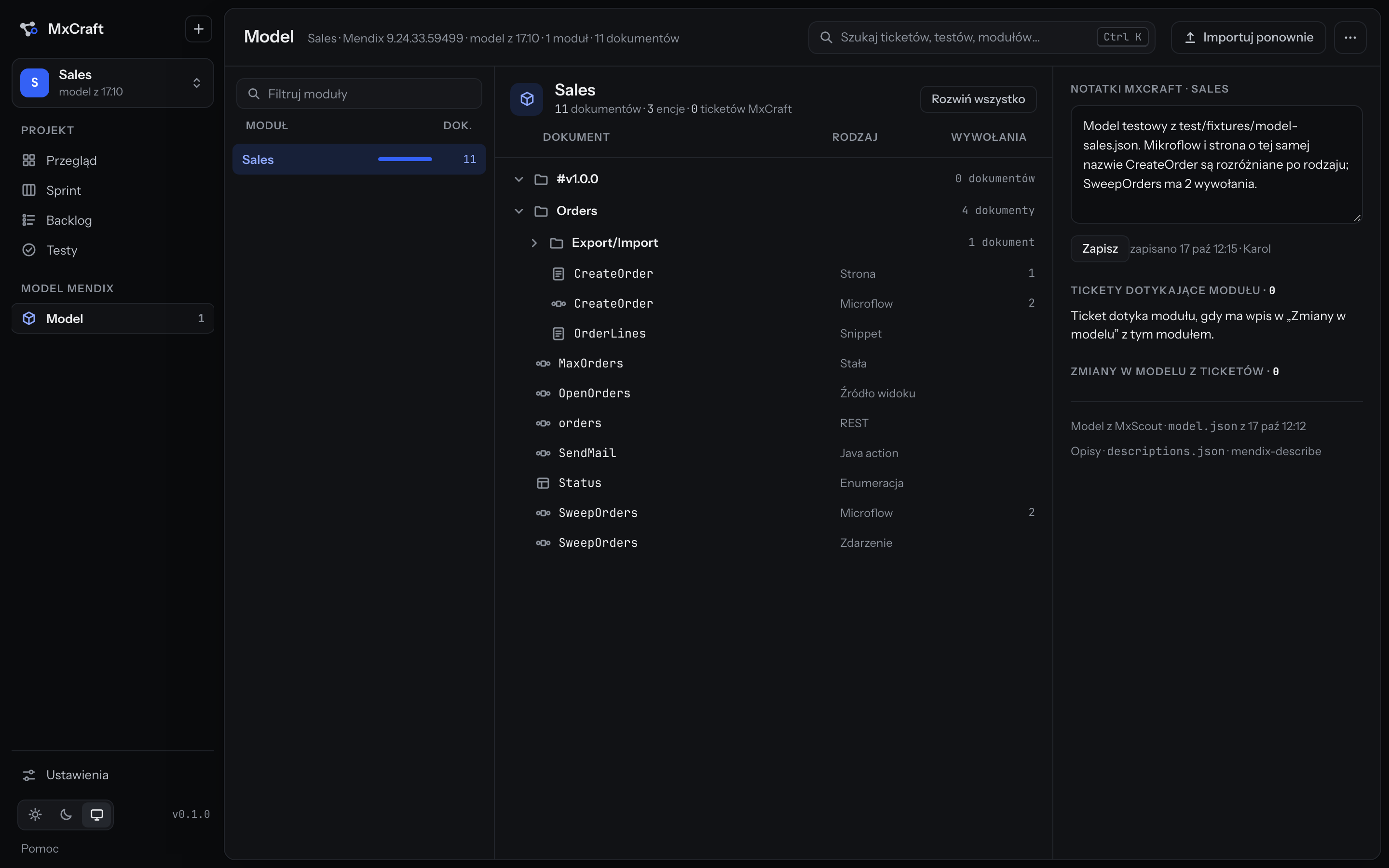
Real Scrum, two seats.
Stories with a brief
Every story carries acceptance criteria, an estimate with its reasoning, and the prompt Claude gets when it picks the story up. Plan a week in one sitting; the sprint runs from there.
Roles that mean something
You are Product Owner, Scrum Master and tester. Claude is the developer: takes stories from To do in order, moves them to Testing, hands you the test — and never marks Done itself.
Tokens, per story and per sprint
Input and output tokens are the only cost you see — on the card, in the drawer, in the sprint header. No currency, no guessing: tokens per point, sprint after sprint.
The app is in the room.
MxCraft never edits the Mendix project. It records what Claude changed in Studio Pro, so the story and the model agree.
Claude is the developer, not the oracle.
MxCraft ships with no AI inside. Claude Code reaches the board through a skill and writes there instead of in the chat: history, criteria, test results, tokens. What you read on the board is what it did.
sprinter
The rules of the board: weekly sprints, stories in order, Testing means a test for you, Done only after it passes. One skill, the same in MxCraft and Tandem.
MCP, or just the files
A local MCP server lets Claude read the sprint and move stories while the page refreshes live. No server? Claude reads and writes the JSON files directly.
Tandem
Watch Claude work on the sprint, step by step with tokens, from its own app on the same board. Stop, ask, approve — without scrolling a chat.
Boring on purpose.
The same rules as MxScout: a local server, no dependencies, plain files. Every claim below is one grep away in the source.
How MxScout does itThree tools, one graph.
The same shell, tokens and components in all three, so you never relearn a screen. The logo is the same three dots, each app in its own colour.
 reads
reads
MxScout
Reads a Mendix model on your machine and lays it out as documentation people read: processes, modules, flows, pages, risks.
mxscout.seajack.dev builds
MxCraft
Builds a Mendix app with Claude and keeps that work organised: sprints, stories, tests and tokens on the model MxScout read. This page.
You are here runs
runs
Tandem
Hands Claude the sprint and shows its work: steps, tokens, questions for you, tests on your desk. The second seat next to Claude Code.
tandem.seajack.devPrivate beta.
Ask, and you get a link.
MxCraft is not public yet: the repository stays private while the board settles on real projects. If you want to run it on your own Mendix app, ask. The link comes with a launcher for Windows, macOS and Linux and the skill for Claude Code; the only thing to have is Node.js 22.